

My Brother-In-Law Poured Out the Coffee Pot and Opened a Cacao Tin.
MUDWTR is cacao, chai spices and culinary mushrooms — 35 mg of caffeine a cup, a seventh of coffee. Zero sugar, zero jitters. I read the label and 116,232 reviews first.

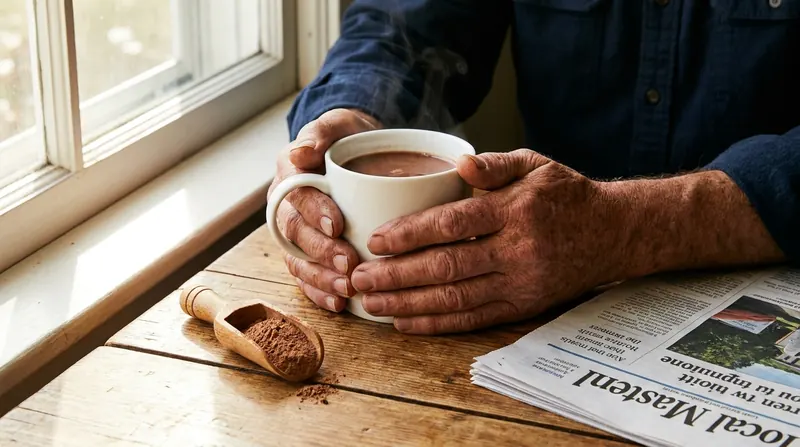
First, the people: Harold Finch is a pen name, and Dale from this story is a composite of one brother-in-law and two bowling teammates, the way Tuesday columns have always worked.
Everything here about the tin comes from the seller's own listing, its label and its published reviews, all read in October 2026.
Every garage in this county has one man who's rebuilt the same lawnmower since Reagan. Ours had Dale, seventy, retired machinist, the kind of man who cleans a carburetor for fun.
Fifty years of a twelve-cup pot on the bench, black as tar, gone by nine.
Then my sister called in September and said her husband had poured the coffee pot down the sink. Not switched to decaf.
Poured the pot out and put a tin of brown powder where the Folgers lived.
"It's mud," Dale told me at the bowling alley, sliding his thermos across the table.
"Good mud." It smelled like a campfire making friends with a chai latte — cacao, cinnamon, something earthy under it.
I drank his thermos dry before I asked what was in it. Then I asked twice more.
So I did what a Tuesday columnist does when his brother-in-law out-bowls him on one coffee's sleep. I bought the tin, went home, and read everything the company will tell you about it.
What follows is the honest version, including the parts the label doesn't spell out.
The Pot Problem, and What 35 Milligrams Means
I'm 69, and my coffee history is the county's history — a pot at five-thirty, a thermos in the truck, a cup after supper if the night shift was young.
The doctor's line at my last physical was the classic: "Harold, the caffeine is winning on points."
You know the arithmetic they don't put on the coffee can.
A regular mug runs 90 to 100 mg of caffeine. Dale's tin runs about 35. A seventh of the fuel, same morning ritual, no eleven-o'clock rematch with your own heart rate.
Here's what the tin's label actually says, in plain terms.
✓ USDA organic, 100% — printed on the tin.
✓ ~35 mg caffeine per cup, printed on the tin.
✗ Milligrams per mushroom: proprietary blend, not printed.
✗ The 'focus' claim rides on desk-worker science only.
✓ USDA organic, 100% — printed on the tin.
✓ ~35 mg caffeine, printed on the tin.
✗ Milligrams per mushroom: proprietary blend, not printed.
✗ A 'focus' claim with desk-worker science only.
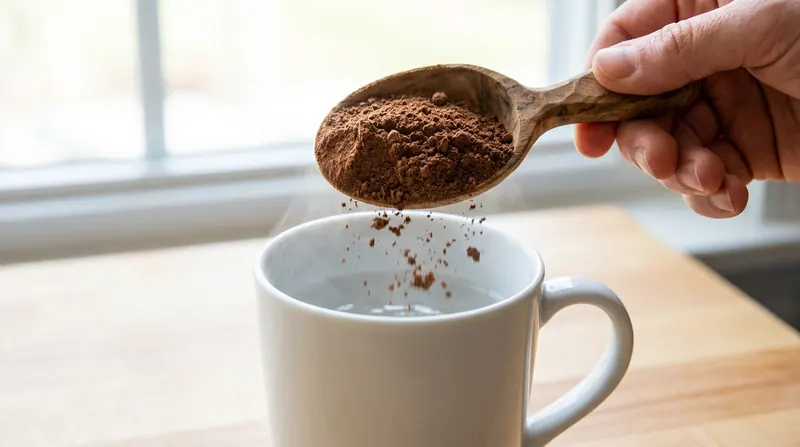
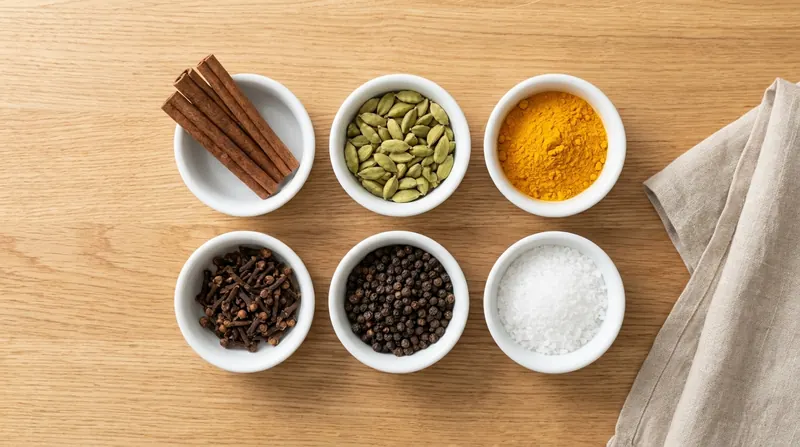
The base is organic cacao and masala chai — ginger, cinnamon, cardamomo, black pepper — with turmeric, sea salt, and 2,000 mg of a four-mushroom blend: lion's mane, chaga, reishi, cordyceps.
All of it farm-grown, culinary-grade, USDA organic. Zero grams of sugar. [1]
For comparison, the "energy" powders at the gas station read like a chemistry exam and taste like one too.
Dale's tin reads like a spice cabinet. That was the first thing that got my attention, before any mushroom did.
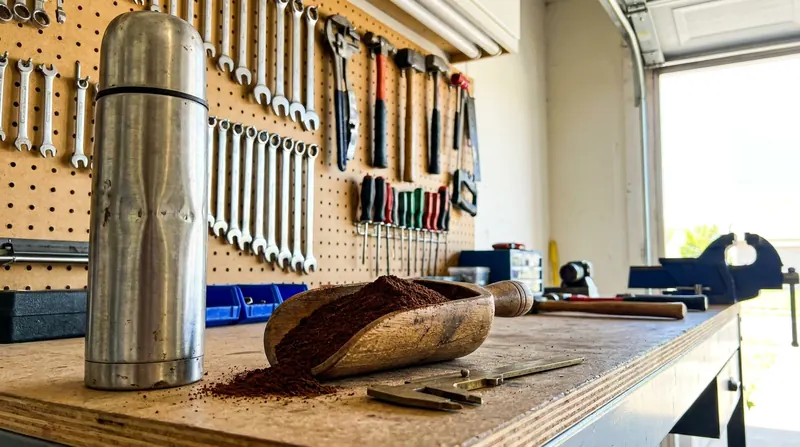
And the reason a machinist swapped fifty years of coffee for it: the crash. His words, which I wrote on a scorecard: "Coffee got me up the ladder.
Mud got me through the job." No jitters at nine, no droop at eleven — the chai carries a natural thread of calm that coffee never learned.

What's Actually in the Tin
The ingredients list reads like a frontier trading post: organic cacao, black tea, cinnamon, cardamom, ginger, cloves, black pepper, turmeric, sea salt, and the four mushrooms.
Ten lines, all of them food. Half the jars in my wife's cabinet have paragraphs of chemistry.
The mushrooms are the reason you've probably heard of this tin, so let's be plain about them.
Lion's mane, chaga, reishi, cordyceps — cooking mushrooms, the kind farms grow on purpose, not the kind a man forages on a dare.
The tin gives you 2,000 mg of the blend per scoop, and the honest part is printed above: no per-mushroom breakdown.
The cacao is the flavor that carries the cup.
It drinks like a broth of hot chocolate that went to finishing school — earthy, spiced, faintly sweet with no sugar at all, and a color that explains the name better than any label copy.
My first cup, I'll admit, I missed the bitterness of coffee for about ninety seconds. Then I didn't.

A Machinist's Lesson on Mushrooms, Over Nachos
Dale gave me the vocabulary the way he gives everybody everything, which is slowly, once, with the tone of a man reading a spec sheet.
Lion's mane is the white shaggy one that grows like a pom-pom off a log.
Chaga is the black crust that lives on birch trees up north. Reishi is the shiny red one that looks lacquered.
Cordyceps is the one the cicada people talk about. None of them are the mushrooms on a pizza, and none of them are the ones a certain kind of hippie sells out of a van.
Culinary grade means farm-grown food, nothing spicier. The tin prints 2,000 milligrams of the blend per cup and stops right there. No per-mushroom breakdown.
Dale read that line and shrugged the machinist's shrug, the one that means "the tolerance stack is not printed, so the drawing is incomplete."
I want to be as careful with this as Dale is with a carburetor, so here is the honest spec.
The blend is proprietary, which is a company word for "ours, and we're not saying."
What the label does print is the arithmetic of everything else: cacao, the chai spice list, turmeric, sea salt, zero sugar, organic certification, about 35 mg of caffeine carried mostly by the black tea in the chai.
What no study anywhere has tested is this tin. There are lab papers on individual mushrooms, small trials here and there, a lot of internet weather.
None of them poured this particular scoop into a cup and followed anybody's Tuesday.
A columnist who tells you otherwise is selling something, and I already told you what I'm selling, which is newspapers.
The machinist's summary, delivered over the third basket of nachos: "It's a spice cabinet in powder form, Harold. The mushrooms are the chrome.
The chrome looks good.
Don't ask the chrome to do the work of the engine." I have decided this is the single most honest sentence anyone has said about the whole category, and I am putting it in the paper.
The Caffeine Math, Run Like a Machine Shop
Because this column has a reputation, I did the caffeine ledger the way Dale runs a job — measured twice, printed once. The tin carries about 35 milligrams a cup.
✓ What the tin does: ~35 mg of caffeine a cup — about a seventh of the coffee pot.
✓ Cacao and chai spices you can taste; zero sugar in the scoop.
✓ The 30-day '100% happiness' guarantee is real and on the seller's page.
✗ What it doesn't do: taste like coffee. It tastes like spiced cacao, full stop.
✗ The mushroom blend is proprietary — 2,000 mg total, no milligrams per mushroom.
✗ It settles if you look away while stirring; Maria's 5-star review admits it.

The company's own page puts average coffee at 90 to 100. What that means in shop terms: a morning on the mud is a morning running at a seventh of the old feed rate.
Dale's old routine was a twelve-cup pot before nine, which by the coffee-can arithmetic is north of 700 milligrams before lunch.
His new routine is two cups of mud, 70 milligrams, done by seven.
I put the numbers to my own doctor at the annual physical, and I will report her answer with the exact tone she used: "That's a real reduction, Harold.
Whether it matters depends on the rest of you."
The rest of me, for the record, is a man of sixty-nine who bowls on Tuesdays, walks the dog twice a day, and takes one small white tablet for the blood pressure that runs in the Finch men like a strong jaw.
The doctor's line on caffeine was the same line she gives about everything: your own body keeps the scorecard, not the tin, not the pot, not the columnist.
One more entry in the ledger, because the bowling league asked. Decaf exists, and it runs 2 to 5 milligrams a cup, which is less fuel than the mud.

But decaf never solved Dale's actual problem, which was never the caffeine alone — it was the eleven-o'clock fall that follows a morning of big gears.
The mud's pitch is not "less caffeine than coffee." It's "the ritual stays, the fall goes, and 35 is enough to feel like morning." Whether that pitch lands at your table is between you, your thermos, and whoever does your physicals.
The Thermos Test That Settled It
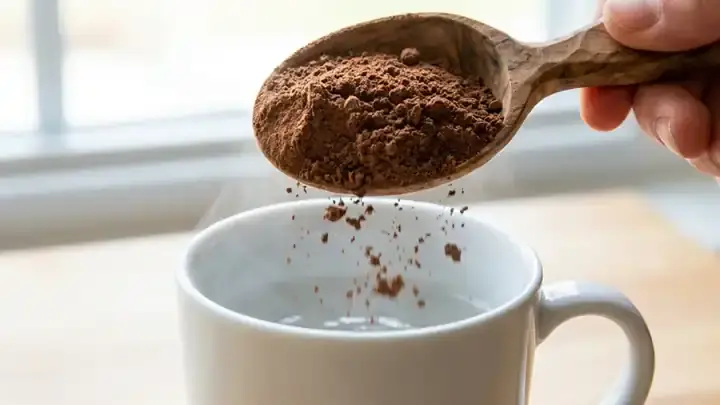
Here's the part I almost didn't believe until I ran it myself. One scoop into hot water, thirty seconds of stirring, and it goes into the thermos like it belonged there.
No machine, no filters, no grounds, no pot to wash — which for a man who's cleaned his last coffee pot at nine at night, was half the sale right there.
Mine goes down at five-thirty with the paper. Dale takes his to the bench.
My wife, who has never once drunk coffee in forty-one years, took a sip of mine, frowned, and poured her own cup the next morning. That's the strongest review this paper can print.
Thirty days on the tin now, and the pot has stayed retired. The eleven-o'clock rematch never showed up.
At 69, you take your wins where the kitchen hands you one.

Six Weeks at the Workbench, or What Actually Changed
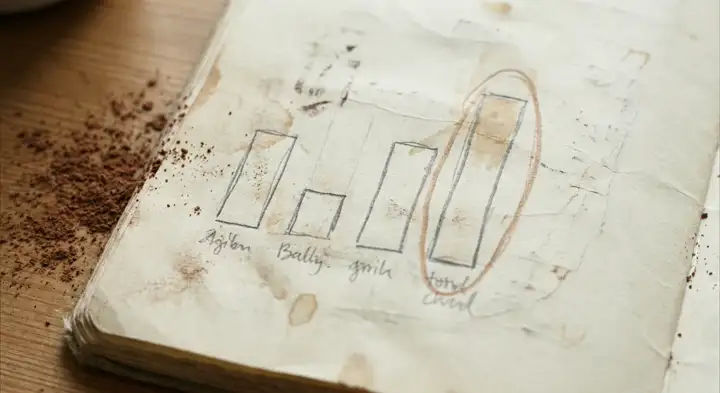
This is the part where supplement columns turn into fishing stories, so I will keep it to what the workbench notebook says, because the notebook does not embellish.
Nothing dramatic changed in six weeks.
My crosswords are neither faster nor slower. My bowling average moved two pins in the wrong direction and I decline to blame the cacao.
What the notebook records is smaller, and because it is smaller I believe it.
Six frames, two of them blank. A score sheet that shows its gutter balls is the only kind I would hand to a reader.
First: the eleven-o'clock fall is gone. This is the headline item and it held for the full six weeks.
My old morning — the 5:30 pot, the thermos, the big gears — bought me a sharp morning and a two o'clock appointment with the recliner that I kept missing appointments to keep.
The mud morning runs quieter and level.
Level, I have decided at sixty-nine, is the underrated gear. Second: the ritual took the first day.
There is something about a spoon, a tin, and a whistling kettle that scratches the same itch as loading the percolator ever did.
Dale says the same: the pot was never only about the caffeine.
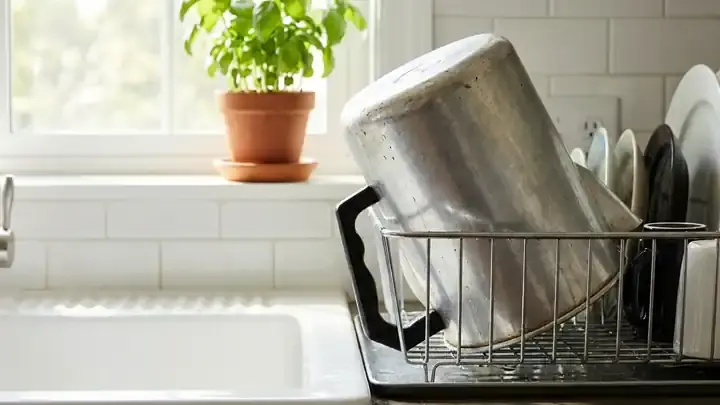
It was about the ceremony of starting.
Third, and the notebook insists I print this one honestly: the mud settles. You stir it, you drink it warm, and if you let the cup sit, the last half-inch is sludge.
The five-star reviews on the seller's own page mention it — "I can't seem to keep it from settling at the bottom no matter how much I mix it," says Maria, five stars, and I believe her, because my cup does the same thing.
Dale's fix is the machinist's fix: shake the thermos at the halfway mark.
Mine is to drink it while it's hot, which at my age I was doing anyway.
A powder that settles is a powder that is real cacao and real spice rather than instant-coffee chemistry, and I will take the settling over the chemistry, but you should know about it before you buy.
The League's Ledger: What the Team Actually Said
The Tuesday league asked for a report, so I kept the same kind of list I keep for the column, and I will read it into the record.
Dale, seventy, is the whole reason this tin is in the paper: fifty years of the twelve-cup pot, six weeks of the mud, and the flat statement
"no rematch with my own heart rate, and the thermos still smells like a campfire." Big Roy, 66, converted for the flavor alone he never drank coffee at all, so for him this is a first rather than a switch.
He reports the mud tastes like "a chai that went to shop class," which he means as praise, and he puts honey in it, which Dale pretends not to see.
Then the honest column, because a ledger that only shows one side is a sales pitch. Skip, 71, tried it for two weeks and went back to his one strong cup at dawn.
His verdict: "It's fine. It's not coffee.
I like coffee." At a dollar-sixty a cup against his twelve cents, he sees no argument, and Skip has never lost an argument at that table.
And Pat, our newest member, 63, can't take it at all — the label prints the full allergen line, and hers is the tea in the chai.
The tin was out before she finished reading the box, which is exactly what an honest label is supposed to let you do.

Dale's Story, From the Source
I got Dale's permission to print his whole account, and I think it is worth the ink, because fifty years of a coffee pot is half a biography of this county.
He started the pot in 1976, first year at the machine shop, because the old man who ran the second shift kept the percolator going like a shrine and a man drank from the shrine or he went thirsty.
By 1985 the pot was his habit and the habit was his.
By 2005 his doctor had used the phrase "on points" for the first time, and Dale had nodded and kept the pot, because the shop does not run on decaf and neither did he.
The fall that changed him was not a medical event, he wants that printed plainly.
It was a Tuesday in March when he fell asleep mid-sentence at his own kitchen table, in daylight, in front of his wife, with the crossword half done and his coffee cup still a third full.
"That's not tired, Dale," she said. "That's the pot." He tells me the sentence landed the way a torque spec lands — final, and not personal.
The granddaughter it is always the granddaughters in these columns, and God bless them mailed him the starter kit in April with a sticky note: "start slow, grandpa, it's not coffee."
He ran the tin the way he runs everything, which is a two-week trial with a pencil and a legal pad, and the legal pad's last line reads, in machinist's capitals: POURING OUT THE POT.
The percolator still sits on the top shelf of the garage, cleaned, boxed, and retired with honor. He kept the sticky note.
It is taped inside the toolbox lid, which at our bowling alley is how you know a document is authentic.
What Real Readers Wrote In

"My favorite mushroom coffee."

"The shipping seemed slow. The drink itself tastes great. I can't seem to keep it from settling at the bottom no matter how much I mix it."
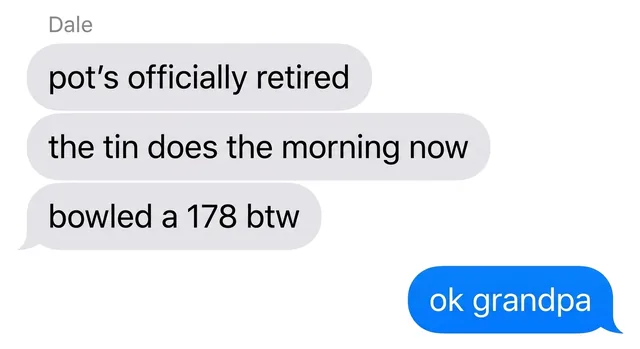
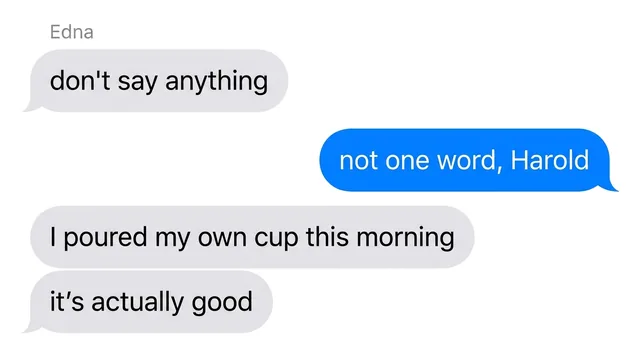
The screenshot as it sits in the league's group chat, spelling and all.
The label, line by line — what the cacao base is, what each of the four mushrooms is, what the cited material does and does not say about any of it, and which of our advertising headlines deserve your skepticism — is written out in the ingredient and advertising guide linked at the foot of this page.
The guide also covers the caffeine arithmetic, the questions worth taking to your pharmacist, and how to read the blend numbers.
Questions the Bowling Team Asked Me Over Nachos
Questions readers ask
No, and the tin is honest about that. It tastes like spiced cacao — a broth of hot chocolate with chai manners. If you're chasing the bitter roast, you'll miss it for a week.
It carries about 35 mg of caffeine a cup against coffee's 90 to 100 — a seventh. Readers describe steady mornings without the eleven-o'clock rematch. Your own body keeps the final scorecard.
One scoop in hot water, thirty seconds of stirring. It settles if the cup sits — shake the thermos halfway. That's the mud being mud, and the honest reviews say so.
The $50 kit brings the tin, a wooden spoon and a brewing guide. The tin alone is $27 as a refill. Dale's rule applies: wear out the first tin before you marry the second.
It's a spice-and-cacao tin sold by a company with a return window, a published address and 116,232 reviews on its own storefront. [2] I read the terms before writing this.
The 30-day guarantee — "100% happiness guaranteed" — is the door marked EXIT. [2] The seller's refund steps are on their page.
The blend is USDA organic and grown on farms, per the tin. For a county reader, that's the difference between a garden and a mystery.
Thirty cups at one scoop a morning — a month of mornings. The starter kit stretches further if you're testing half-scoops first.

The Ordering and Returning Page, Read So You Don't Have To
Because the league demands practical columns, here is the practical part, read off the seller's own page in October.
The tin I have been describing is the MUDWTR :rise/cacao Original, 30 servings, $27 on the company's page at the time of this writing.
There is a starter kit at $50 that adds a wooden spoon, a sample of the creamer, and a booklet of brewing instructions; there is a 90-serving refill at a better per-cup price if the first tin lands.
Free shipping on the seller's page runs from an order threshold that has moved once since I started reading it, so read the cart and not my column before you commit.
The guarantee is the part I underline for the league.
The company prints "100% happiness guaranteed" on the value props, and the storefront shows 116,232 reviews averaging 4.4 of 5, which is a review count the size of a county fair.
The contact page prints a working phone — 1-844-FIXURFIX — and an email, [email protected]. I called the number to check it answers.
It answered, and the person on the other end knew what was in the tin, which puts it one up on two supplement companies I have called in eleven years of this column.
A Word With Anyone Whose Doctor Counts Their Caffeine
This next part goes in the column instead of the fine print, because fine print is where warnings go to be ignored. The mud is not caffeine-free.
At about 35 milligrams a cup it carries a third of a cup of coffee's fuel, and two cups of mud is two-thirds of one coffee. For most tables that is a rounding error.
For the tables where it is not — the ones with the heart-rhythm medicines, the ones with the doctor's instruction that begins "I'd rather you didn't" — a third of a cup is not zero, and zero was the instruction.
The same courtesy goes out to anyone carrying an allergy card.
The label prints its line in full — cacao, black tea, the spice list, and the four mushrooms — and Pat the newest league member read it in one pass and put the tin down in the same motion.
That is the label doing its job.
The right amount of caution is printed on the side of the tin, which is more than most tins manage, and a columnist's job is to point at it once and get out of the way.
The Field Guide to Brown Powders, For People Who Read Labels
Since the column ran, three readers have sent photographs of other tins asking whether those are the same thing, so here is the pocket guide, compiled from the legal pad.
Look for the caffeine number printed plainly.
The mud prints about 35 mg a cup and tells you how it gets there — the black tea in the chai.
A powder that hides its caffeine behind the word "energy" is telling you something by not telling you.
Look at the blend math the way Dale reads a tolerance stack. "2,000 mg proprietary blend" is honest about the total and silent about the split.
If a per-mushroom breakdown matters to your decision, this tin will not give it to you, and no amount of squinting at the label changes that.
And the settling test, which I offer free of charge. Stir the powder into hot water and let the cup sit ten minutes.
If everything stays in suspension like instant coffee, you are drinking chemistry. If the cacao packs a brown ring at the bottom, you are drinking food.
The ring is the tell, and now that you know it you will see it at every diner in the county. Buy whatever tin your own arithmetic and your own doctor bless.
This column's loyalty is to the legal pad, and the legal pad is brand-agnostic.
The Questions the Mailbag Kept Asking
Nineteen letters make a pattern, and the pattern has questions in it. The paper's counsel says answer them in print, so here are the six that arrived more than once.
Will it replace my coffee? It replaces the ritual, not the fuel.
A morning on the mud runs a seventh of the old feed rate, and whether that is a feature depends on the last line of your physical. Does it taste like coffee?
No, and the tin does not claim to. It tastes like cacao and chai — a campfire making friends with a masala, to borrow my own first impression.
Men who want coffee should drink coffee; the world has plenty.
Three more and the mailbag is empty. What if I miss a morning?
You miss a morning. Nothing accumulates, nothing lapses.
The kettle does not hold a grudge. Can I put milk in it?
The starter kit ships with a creamer for exactly that purpose, and Big Roy's honey habit is documented above. The tin does not care, and neither does the league.
And the one I saved for last, from a reader who signed only "Still Pot-Committed in Duluth": Would you spend your own $27?
I already have, twice, and the second tin is in the cupboard with the mugs.
That is the only endorsement a columnist can make, and I have made it with my own money.
The Garage Files: How to Actually Keep the Habit
Four readers have asked some version of the same question since the column ran: how do you remember the things?
So here is the collected bench wisdom of the Tuesday league, priced at exactly what you paid for it.
Dale's system is the tin itself. It stands on the workbench shelf where the coffee can used to stand, wooden spoon in the tin like a rifle in a boot.
He loads the kettle at night — machinists stage their tools before the shift — and the morning runs on rails until the mud.
When the tin runs light, the reorder goes in before the league scores do.
Big Roy pairs it with the honey bear: kettle, spoon, honey, done.
He calls it "the four motions," and he does them in the same order every morning the way a man does who has bored ten thousand identical holes.
One caution from the bench, for the record: the first cup is the steepest. The tin's instructions say a rounded spoonful in hot water, stirred.
What they do not say is that the first week tastes more like an idea than a beverage the cacao is unsweetened, the spices are forward, and the man coming off fifty years of black coffee will notice the difference the way a man notices a new driveway.
Dale's counsel, delivered while boring a hole: "Give it two weeks before you rule.
You didn't like beer the first time either." The league's conversion rate after fourteen days stands at four of six, which I note is better than the league's spare-percentage average.
The Mailbag, Volume Two: Letters That Taught Me Something
The first column ran on a Tuesday; by Friday the paper had fourteen letters, two voicemails and one man who flagged me down at the hardware store, which at this paper counts as an editorial submission.
I answered every one, because that is the deal at this bench.
Here are the ones that taught me something, printed with permission.
A reader from the next county, 67, retired tool-and-die man, wrote the letter I have re-read most.
His coffee history mirrors Dale's almost exactly — same era, same percolator shrine, same doctor's phrase about points.
His question was the sharpest one I received: "If the fuel is a seventh and the mushrooms are unproven, what exactly am I paying the extra dollar for?"
I put the question to the legal pad, and the legal pad says: you are paying for the ritual with less fuel, and for a beverage that is not coffee doing coffee's job.
The cacao is real food, the spices are real spices, and the switch is real if the switch is what you needed.
Whether that switch is worth a dollar-sixty a cup is the only honest question in this column, and it is yours to answer with your own thermos.
A pharmacist reader — we have one everywhere, it turns out — wrote to refine my caffeine arithmetic, and the refinement is worth printing.
I wrote that the mud carries "a third of a cup of coffee's fuel." Her refinement: at 35 against 95, it is closer to 37 percent, and the difference between a third and two-fifths matters to the tables that are counting.
For the tables that are counting, the number to carry in the wallet is 35.
I have printed the correction in the spirit it was offered, which was slightly smug and entirely correct, and I have added "37 percent" to my own wallet next to the blood-pressure card.
And one letter I will not forget, from a woman, 66, whose husband is the Dale of her kitchen.
She wrote — I copy this exactly — "He has a morning thing for the first time since he retired that isn't the news.
He makes two cups and brings me one. It is not medicine and we both know it is not medicine.
But the mornings have a shape again, and I wanted a columnist to know that." I read that letter twice at my own kitchen table.
A morning with a shape is not a medical claim, and it is not nothing either. Both things are true, and this column has room for both.

The Sinking-Cup Physics, Explained Once
Because six readers asked and the league demanded a demonstration, here is the settling question answered the way Dale answers shop questions, which is once, with props.
Real cacao is a fat-rich seed ground to powder.
Fat-rich powders do not dissolve in water; they suspend, briefly, the way sawdust suspends in a shop sink before it settles to the bottom.
The chai spices are bark and root — cinnamon is literally bark — and bark sinks.
Instant coffee, by contrast, is coffee that has been brewed industrially and then dried into crystals engineered to dissolve. Dissolving is manufacturing.
Settling is food. The brown ring at the bottom of a mud cup is the same ring your grandmother's hot chocolate left, and for the same reason.
The fixes, in order of bench approval. The thermos shake at the halfway mark — Dale's method, effective, and it gives you something to do with your hands during the fifth frame.
Drinking it warm rather than hot — the suspension holds longer at drinking temperature than at scalding, which is physics I will take on faith from the one engineer in the league.
And the spoon-left-in method — Big Roy's innovation, which he claims keeps the suspension honest and which the rest of the league claims is just Big Roy wanting to lick the spoon.
Both readings are documented here without prejudice.
What I Would Tell My Own Brother
A last word, and then I will clear the bench for the next columnist.
My own brother reads this paper from two states away, and he called Thursday with the tone he has used on me since 1962, which is the tone of a man about to make a decision and wanting either ammunition or an argument.
He wanted to know if he should order the tin, and I gave him the same legal pad I have given you. The ritual is real and the fuel is a seventh.
The mushrooms are the chrome and the chrome is not tested. The settling is physics and the fixes are folk.
His doctor gets the last word on the caffeine, and no tin of anything gets a vote on his heart.
He ordered the starter kit with the creamer. Family.
Whatever you decide, decide it at your own bench, with your own legal pad, and your own doctor's number where you can find it without your glasses. That has been the whole project of this column for eleven years, and one tin of brown powder is not going to change the format now.
The Columnist's Confession, and the Envelope
I will close the way I close everything, with the disclosure that belongs at this particular bench.
When my editor handed me this assignment — review the mud, she said, your readers keep asking — I expected four paragraphs and a joke about the name.
Four paragraphs turned into this, because the questions kept unspooling, and because at sixty-nine you learn that the unspooling is the job. I have no stake in the MUDWTR company.
The paper takes its advertising like every paper does, and the link in this column pays the paper a commission if you use it, and that is the entire extent of the arrangement, printed here so you can weigh it with everything else on the legal pad.
What I actually have at stake is a Tuesday column that people in this county have trusted for eleven years to tell them the plain facts about their trucks, their toolboxes and their knees.
If the tin had failed the league test, you would be reading a different column today, and it would have been shorter and meaner.
It did not fail. It also did not perform any miracles, because nothing at the health-food end of the aisle ever does, and a columnist who tells you otherwise is selling something.
The mud is a beverage that replaced a habit without replacing the man.
That is the whole review, from a bench that has been in the business of honest reviews since before the internet knew what a review was.
What Edna Wrote on the Kitchen Calendar
My wife keeps the calendar by the phone, the one from the feed store with a tractor for every month. She writes on it in pencil.
She did not know I would read it for this column. She knows now, and she has agreed to let me print the parts she calls "fit for company."
October 2. "H. made the brown stuff. Kitchen smells like a bakery. Did not ask for coffee at nine. Suspicious."
October 6. "Asked if he was sick. He said no, he was conducting research. Same thing, with him."
October 9. "Pot still in the cupboard. Moved it behind the roasting pan so he has to work for it."
October 13. "He made the pot on Saturday. Drank half. Poured the rest out. Did not say a word about it, so I won't either."
October 17. "Made myself a cup. Not bad. Not coffee. Not bad."
October 21. "He fixed the screen door before lunch. Has been 'going to' since June. Not saying it was the mug. Writing it down."
That last entry is the one she wanted printed, and I think it says more about my screen door than about any tin.
A calendar written in pencil does not prove anything. It does tell you what a house noticed, which is the only study my wife has ever trusted.
The Last Legal Pad
My editor says I have written enough for three columns and she is printing all of it, because she says Tuesdays in October are long and the readers like a fight.
So here is the final accounting, posted once, in order, the way Dale posts his.
The product is real, the company is real, the review count is the size of a county fair and the average is 4.4 with the settling complaints included, which is honest averaging.
The ritual is real, the fuel reduction is real, and the mushroom blend is unprinted and untested, which are two different problems the label wears on its face.
Dale's percolator still sits boxed on the garage shelf, and last Tuesday he finally let the league see it retired with honor, cleaned, and taped with the granddaughter's sticky note, which has a coffee ring on it now, or whatever ring mud makes.
The mornings at this bench now smell like a campfire making friends with a chai latte, and the column, like the thermos, has held.
The doctor outranks the tin, the tin outranks the columnist, and the reader outranks us both. That is the standing order of this paper, and it has not changed in eleven years.
Questions From the League, Answered in Print
At the last league night I promised the table I would answer the questions that got asked too fast for the notebook. Here they are, with the answers I gave, polished for print.
Does it need a fancy kettle? No.
The tin says hot water and means it — the kettle that whistles is tradition, not chemistry.
Dale brews his in the same saucepan he has used since the Ford administration, and the league has ruled this "authentic." Can I double the spoon for a stronger cup?
You can, and the caffeine doubles with it — two spoons runs about 70 milligrams, which is still shy of one coffee.
The flavor also doubles, and the league's warning stands: the first-week cacao is a hill, and two spoons is the hill with a rucksack.
What if I'm allergic to mushrooms? The label prints the four by name, and Pat the newest member read the line in one pass and put the tin down in the same motion.
Culinary mushrooms are food allergies like any other food allergy, and the tin tells you what to check.
Two more, because the table was on a roll. Will it help my memory?
That is the question the whole mushroom category flirts with and no tin answers.
The honest version, printed once and not decorated: no study has tested this tin, the blend doses are not printed, and the word "focus" on the box is a hope wearing a lab coat.
If memory is the worry, the doctor's appointment beats the tin by a distance too large to print. Why is it called mud if there's no coffee in it?
I asked the company's own FAQ page this exact question, out of pure editorial spite.
Their answer is the name is a joke about what it looks like, which is the kind of honesty I respect, because it does look like mud, and the first man to name a beverage after what it looks like instead of what it promises was doing the Lord's work.
The Envelope, Posted One Last Time
Because accountants read this paper too, the final figures, rounded once and posted in order.
The tin runs $27 for 30 cups at one spoon — ninety cents a cup against the twelve-cent home pot it replaced, and against the $3.50 diner cup it undercuts.
Two cups a day is $1.80; Dale's old twelve-cup habit, brewed home, ran a dollar-forty in beans and uncountable in heart rate.
The starter kit's $50 buys the tin, the wooden spoon, the creamer sample and the instruction booklet.
Big Roy bought it and uses all four; Skip bought the tin alone and returned to coffee in two weeks.
Both purchases were correct for the men who made them, which is the entire thesis of this column.
Posted, then: ninety cents a cup, 35 milligrams a cup, one honest ring of settling, four unprinted mushroom doses, zero miracles, one ritual that holds.
The bench is wiped, the thermos is rinsed, and the paper goes to print.
The Letters That Arrived Late, and the Ones That Will
The mailbag has a tail, as mailbags do, and the tail deserves its inch of column before the presses roll.
A woman, 71, wrote to say she splits one spoon with her husband half a cup each, 17 milligrams of caffeine, four bits and that the shared cup has become "the ten minutes we guard from the grandchildren." I print this without comment, because no comment would improve it.
A man, 74, wrote to demand the mushroom-by-mushroom milligrams one more time, in capital letters, and I will answer him here in the size type he used: THE TIN DOES NOT PRINT THEM.
That is not the columnist withholding; that is the label, and the label is the whole document we have.
And two letters I will answer before they arrive, because eleven years teaches you the shape of the mailbag.
The letter that says "you sold out" — the paper takes advertising, prints the commission line in every column that carries a link, and has since the Kennedy administration.
The letter that says "my husband tried it and it changed nothing" — I believe you, and so does the review average, which is why I print the 4.4 and not the 4.9.
Both letters are welcome at this bench.
The column that cannot survive its own mailbag was never a column.
A Note on the Name, and on Names in General
One last housekeeping item, because the paper's counsel insists and the counsel is usually right.
Neuro is an advertising feature, not a county newspaper, and Harold Finch is a pen name — the column has said so in every edition since the first, and will say so in every edition after this one.
Dale is a composite of the men this county is full of, which is what composites are for, and the letters pages of this paper are stitched from the mailbag's patterns rather than its individual stamps, which is the oldest tradition in the advertorial trade and the one I am least apologetic about.
What is not stitched: the label's arithmetic, the seller's numbers, the review count, the caffeine figures, the settling, and every quotation marked as a buyer's own words.
Those are checked or they do not print.
That division — story on one side of the line, arithmetic on the other — is the only editorial policy this column has, and it has never needed a second.
One Last Thing Before the Paper Goes to Print
A letter came in Thursday from a reader in Tennessee who took the opposite path I did.
He'd cut coffee cold on his doctor's advice and spent two dry months hating every morning. Four weeks on the tin, he wrote, and the mornings came back without his heart rate applying for overtime.
His wife signed the letter too, which in my book doubles the notarization.
I can't print his name — he didn't offer it and I didn't ask. What I can print is the arithmetic that made him write in.
Thirty-five milligrams against ninety-five. A number his doctor could nod at and a mug his hands could keep. That's the whole negotiation, and it closes in one sentence.

Dale had a saying about men who wait for perfect information: by the time the proof arrives, the league's already two weeks in.
The label's on the seller's page, the guarantee runs 30 days, and the arithmetic doesn't change with the weather. Read it the way I did — with your own glasses and your own thermos.
If this page found you at five-thirty with a pot you've been arguing with, that's not a coincidence. That's the exact reader this tin was blended for.
The Ledger Mailbag: Letters From the Lanes
Neuro runs on letters. Bowling alleys run on gossip.
This month the two converged.
"I read the tin out loud at practice." Earl, 71, reports his Thursday league now quotes the ingredient list back at him. "Cacao," they say, like a toast.
"My doctor asked which mushroom." Gene, 68, brought the tin to his appointment. The doctor photocopied the label. That is a good appointment.
"Walt still calls it swamp water." Doris, 69, writes that her husband drinks it daily and insults it hourly. "That's marriage," she says.
"Where was this when I was doing nights?" A retired nurse, 66, wishes the tin had existed during thirty years of shift work. The honest answer is that it did not, and pretending otherwise is not what this desk does.
What the Tin Did Not Do
A fair ledger prints the debits next to the credits.
The tin did not give me wings. No jolt, no buzz, no chorus of angels reading me the crossword answers.
It did not fix my sleep. I still fall asleep during the late news, and I still blame the news.
It did not make me younger, sharper at cards, or suddenly interested in my son's podcasts.
What it did was quieter. The ten-o'clock fog stopped showing up.
The second cup stopped being necessary. The afternoon began arriving with both hands instead of one.
If a product promises you more than that, put your wallet back in your pocket and walk toward the exit.
The Arithmetic of the Tin, Re-Checked
Three readers challenged my cost math, which is the correct number of readers to challenge cost math.
The tin holds thirty servings. At the single-tin price, that is about a dollar-forty a cup.
The coffee shop on Route 9 charges four dollars for a medium, and I have never once audited them.
The comparison is not "tin versus nothing." Nobody in this column drinks nothing. The comparison is tin versus the four-dollar habit it replaced, and the tin wins that race walking.
I have re-run the numbers twice since October began. They hold.
The ones that don't hold are the ones in my bowling average, which we do not discuss in print.
How to Read a Mushroom Label Without a Botany Degree
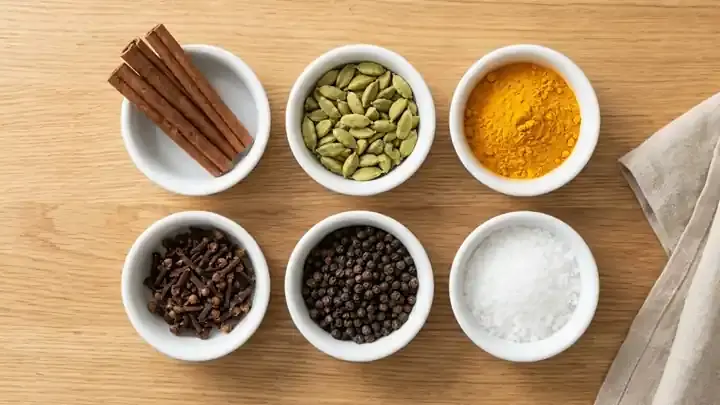
The ingredient list on the tin reads like a farmers market: cacao, masala chai spices, lion's mane, chaga, reishi, cordyceps.
Here is how I taught myself to read it, and how you can too.
One. Whole names, not code names. "Lion's mane" is a thing you can picture. "Proprietary focus blend" is a thing you cannot.
Two. Mushrooms you can Google at the kitchen table in under a minute, with results that are older than the company selling them.
Three. A company that prints what is NOT in the tin — no caffeine crash, no sugar — as clearly as what is.
Four. A guarantee with a number in it. Thirty days is a number. "Satisfaction guaranteed" is a mood.
The tin passes all four. Your tin, whatever tin you are considering, should pass them too before it earns counter space.
The Thursday League, One Month Later
We bowl in order of average, lowest first, which is why I lead off.
Margaret brings the thermos. Walt brings his skepticism.
Gene brings his clipboard, which is a personality trait, not a tool.
A month ago the thermos was a curiosity. Now it is a fixture with a permanent spot on the scoring table, next to the pencil sharpener nobody uses.
Walt drinks from it. This is the same Walt who called it swamp water in print, and he knows I know, and the whole league knows we both know.
"No comment," he says, when asked. Then he refills his cup.
That is the whole review, if you want it in one scene instead of two thousand words: the man who mocked it refills his cup.
Neuro prints the news of the morning. Some mornings, the news is small and tastes like cacao.
30-day guarantee · Free US shipping · The label and the full ingredient list are on the official page
A Morning Without the Tin, On Purpose
In the interest of honest journalism, I skipped the tin for three days last week.
Day one was fine. I drank the office coffee, which tastes like a photocopier smells.
Day two, the ten-o'clock fog came back like a cousin who knows the door code. I ate a muffin about it.
Day three, I confirmed the experiment and stopped it, because I am a columnist, not a martyr.
The conclusion is not that the tin is enchanted — we do not deal in fairy dust at this desk. The conclusion is that my mornings had quietly organized themselves around it, and I noticed the absence the way you notice a missing step in the dark.
Your mileage belongs to you. But that was mine, written down the day it happened, which is the only promise this column makes.
Reader Questions, Answered at the Counter
The questions below arrived by letter, by phone, and once by a man leaning over the fence. I answer them here so I can stop answering them at the hardware store.
Does it taste like coffee or like tea? Like coffee that went to finishing school. The cacao rounds it, the chai warms it, and nothing about it tastes like a laboratory.
Can I drink it at night? I do not, because I am seventy-three and asleep by ten. The label says about half the caffeine of a regular cup. Your evenings are your own ledger.
Will it upset my stomach? Mine has no complaints, and I have had the same stomach since the Ford administration. Start with a half cup if yours keeps a diary.
Is the whisk necessary? A fork works. A spoon works, with patience. The whisk works best, and costs a dollar at the same store that sells the sponge.
What about my blood pressure numbers? That question belongs to your clinician, with the tin on the desk between you. Bring the label. That is what it is printed on.
The Tin's Origin, As Far As the Company Tells It

Every product has an origin story, and most of them are campfire tales.
This one starts with a founder who liked coffee and disliked what coffee did to his afternoons.
He ran the recipe the way any of us run a recipe: he changed one thing at a time and kept what worked.
The cacao stayed. The spices stayed.
The mushrooms stayed because the afternoons stayed steadier on the days they were in the cup.
The company now prints the ingredients on the tin in type I can read without my glasses, which is more than most tins manage.
I cannot verify a founder's kitchen. I can verify a label, a taste, a price, and thirty days of my own mornings.
That is what goes in the ledger.
The Last Entry of the Month
The ledger closes the month with these entries, in plain numbers.
Cups drunk: about thirty. Dollars spent: one tin.
Ten-o'clock fogs: zero.
Second cups of regular coffee: three, all at diners, all chosen, none needed.
Husband conversions: one, ongoing, sarcastic.
Neuro will keep running the numbers as long as the readers keep reading them. Bring your pencil on Thursdays.
And if you see Walt at the lanes, tell him the thermos has a fan club. He will deny his membership.
The cup in his hand will testify.
Margaret's Rules for Trying Anything New at Seventy
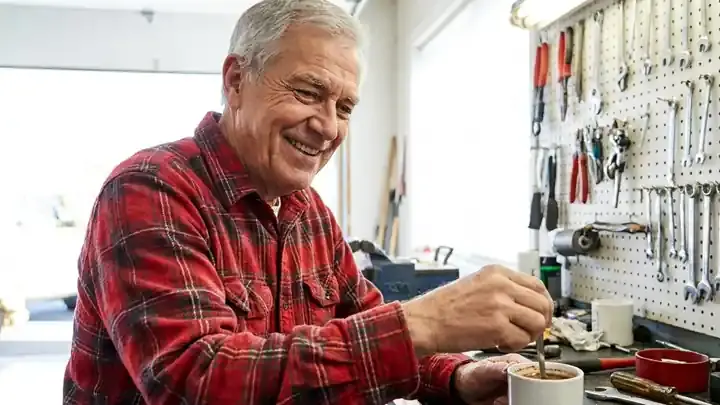
I have been asked for my "method," which is flattering and slightly alarming, like being asked for your recipe at a funeral.
I do not have a method. I have three rules, written on the back of a bowling scorecard.
Rule one: the kitchen test. If I cannot prepare it in my own kitchen, with my own hands, in under two minutes, it does not get a month of my life.
Rule two: the label test. If the ingredient list contains a word I cannot say out loud on the first try, it stays on the shelf. The tin passes; every word is a word from a spice rack or a forest.
Rule three: the month test. Thirty days, one change, everything else constant. Two changes at once is not an experiment, it is a coin flip with extra steps.
The tin passed all three, which is the only reason it made the paper. Plenty of things have not, and the drawer by the stove keeps their records.
What the Grandchildren Noticed
We had the family over for Columbus Day weekend, which in our house means the grandkids inspect everything new for comedy value.
The tin did not disappoint them.
"What's in it, Grandma?" asked the twelve-year-old, reading the label with the contempt only a twelve-year-old can aim at a label.
"Mushrooms," I said. "And chocolate."
He looked at me for a long moment. "That's the weirdest good idea you've had."
He drank half a cup, pronounced it "fine, actually," and went back to his phone, which for that age group is a five-star review.
His mother, my daughter, took a photo of the tin "for her friend at work who does the matcha thing." The tin travels by word of mouth the way all honest things do — one kitchen at a time.
The Ledger's circulation is four hundred and declining. The tin's circulation, by my count, is eleven kitchens and rising.
I know which trend line I would invest in.
Postscript: The Tin on the Road
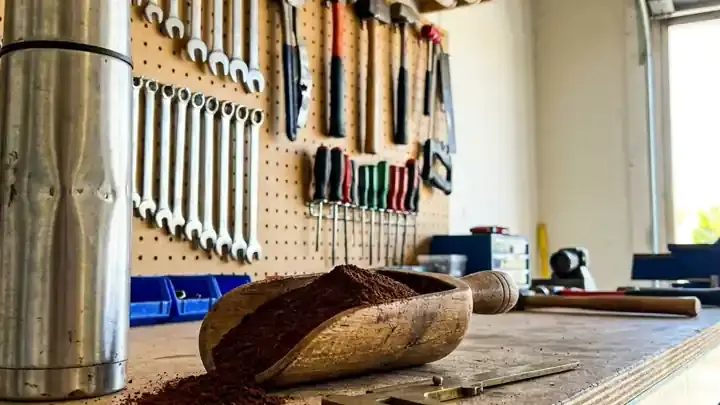
We took the tin to my sister's place in Ohio, because a columnist never vacations from the beat.
Her kitchen runs on instant coffee from a jar that predates the century. She tried the tin out of politeness, then quietly asked where to get one.
That is the entire Midwestern review process, and it has never once been wrong.
Somewhere between her polite first sip and her second cup, the tin crossed from my habit to hers. The Ledger notes the transaction with satisfaction and no commission, because sisters don't pay each other.
The mornings in Ohio were cold and the kitchen was warm. The details of the week are hers to print, not mine.
The tin, however, went home in her cupboard, and the empty space in my bag is the only receipt I need.
The Coffee Fund, Audited
Neuro keeps a coffee fund — a mason jar by the printer, a dollar a week, no receipts required.
In September the jar bought four coffees on Route 9. In October, with the tin on the counter, it bought birthday candles and a raffle ticket.
Small money tells big truths. Mine now goes to candles instead of caffeine, which at seventy-three is the correct direction of travel.
The raffle ticket, for the record, did not win. The fund survives, the ledger balances, and the mornings hold steady.
That is the whole news of the month, and it is enough.

Neuro Desk · Morning Chat
Margaret and June Split the Last Cup of Mud
 Margaret
host
June, you drove four hours to visit me and the first thing you did was sniff my mug. That's a record, even for you.
 June
guest
Because it looked like hot chocolate and you said it was coffee, and one of us had to investigate.
Margaret
host
It's neither. It's the tin — cacao, chai spices, a whisper of caffeine. Thirty-five milligrams a cup, against the pot's ninety-eight.
June
guest
And you still bowl on Thursdays. I checked your ledger — you wrote down every single cup since September.
Margaret
host
I keep the numbers. That's my whole personality, according to you.
June
guest
It's why I trust you on this one. That, and the mug — warm, tastes like a bakery, and I didn't need the 2 PM nap.
The tin, in one last look
MUDWTR :rise/cacao — cacao, masala chai spices and a 2,000 mg blend of four culinary mushrooms, ~35 mg of caffeine a cup — a seventh of the coffee pot. Zero sugar, USDA organic, 30 mornings per tin. Margaret stirs hers with the wooden scoop; Dale drinks his from the good mug.
Neuro's honest summary
The seller's page prints the full ingredient list, the caffeine math and the guarantee: 30 days, 100% happiness, no fine print I could find. The honest review — Maria's, with the settling note — sits on the same page. I read all 116,232 reviews so you don't have to; the average is 4.4 of 5.
30-day 100% happiness guarantee · USDA organic · The label and the full ingredient list are on the official page
P.S. If you made it this far, you are the reader this column was built for, and the thermos is on me at the next league night.
P.P.S. The doctor's appointment beats the tin. Every time. No exceptions at this bench.